Wholesale Solar Panel Cleaning Brushes Factory & Quotes
Precision-engineered automatic rotary brush rollers, telescopic carbon-fiber wash systems, and intelligent multi-axis PV cleaning robotics engineered to restore peak photovoltaic generation and lower LCOE for utility & C&I arrays worldwide.
Factory-Direct Photovoltaic Maintenance Hardware
High-Yield Solar Cleaning Equipment & Integrated Systems
Manufactured under strict ISO 9001 quality frameworks in the Beijing Economic & Technological Development Zone. Direct OEM/ODM volume pricing, CE certified components, and turnkey compatibility.
Best Seller
Automatic Clean Brush
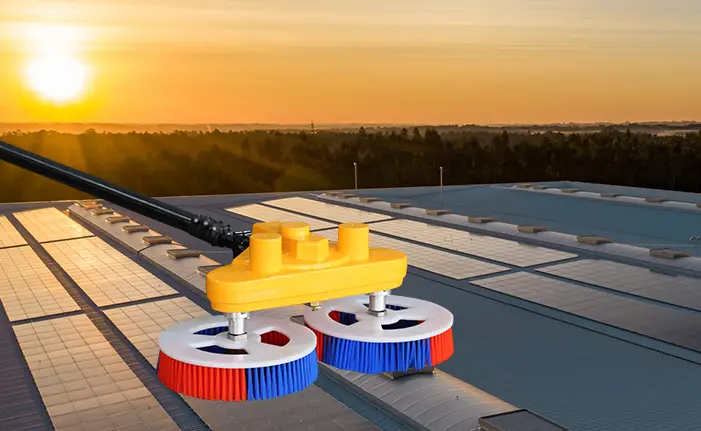
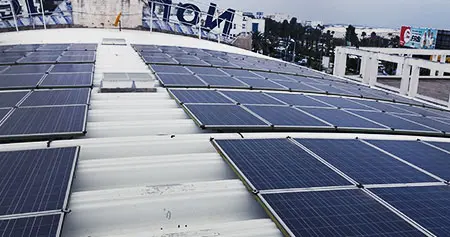
Dual-head counter-rotating brush heads equipped with ultra-soft polyamide bristles, water nozzles, and ultra-lightweight telescopic carbon fiber poles for rooftop & C&I installations.
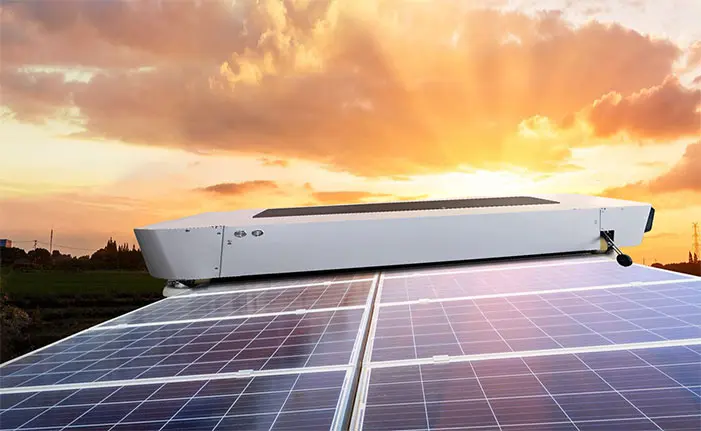
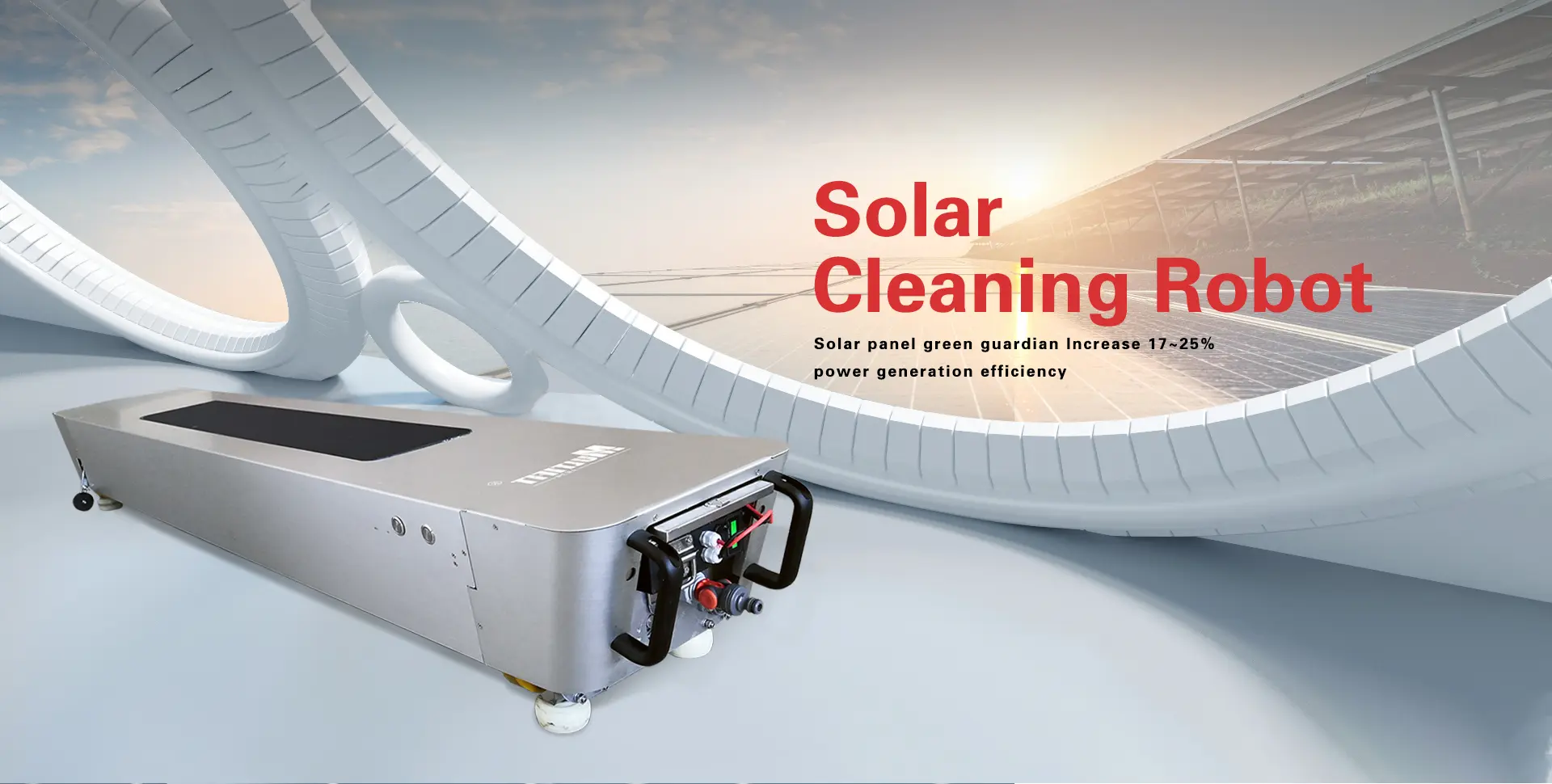
Autonomous caterpillar-driven cleaning robot with dry-cleaning micro-fiber brush rollers, remote trajectory steering, and edge anti-fall sensing for utility-scale solar farms.
Centralized high-pressure hydraulic feed modules integrated with specialized brush skids to optimize water usage down to 0.15L/module for massive ground arrays.
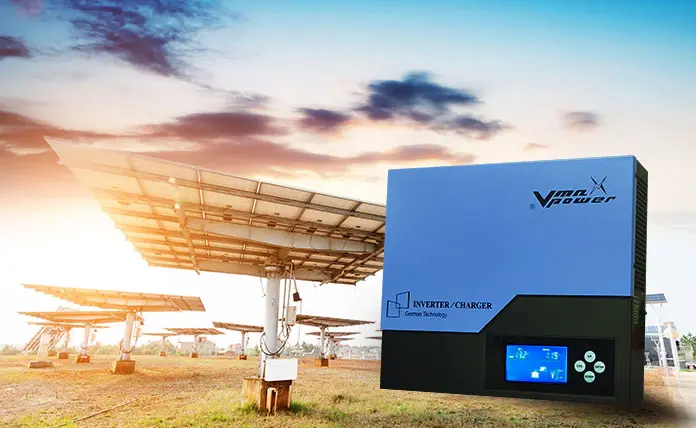
Pure sine wave toroidal transformer architecture with 300% surge capacity and 32-bit DSP controllers designed for high-inductance pumps, compressors, and weak rural grids.
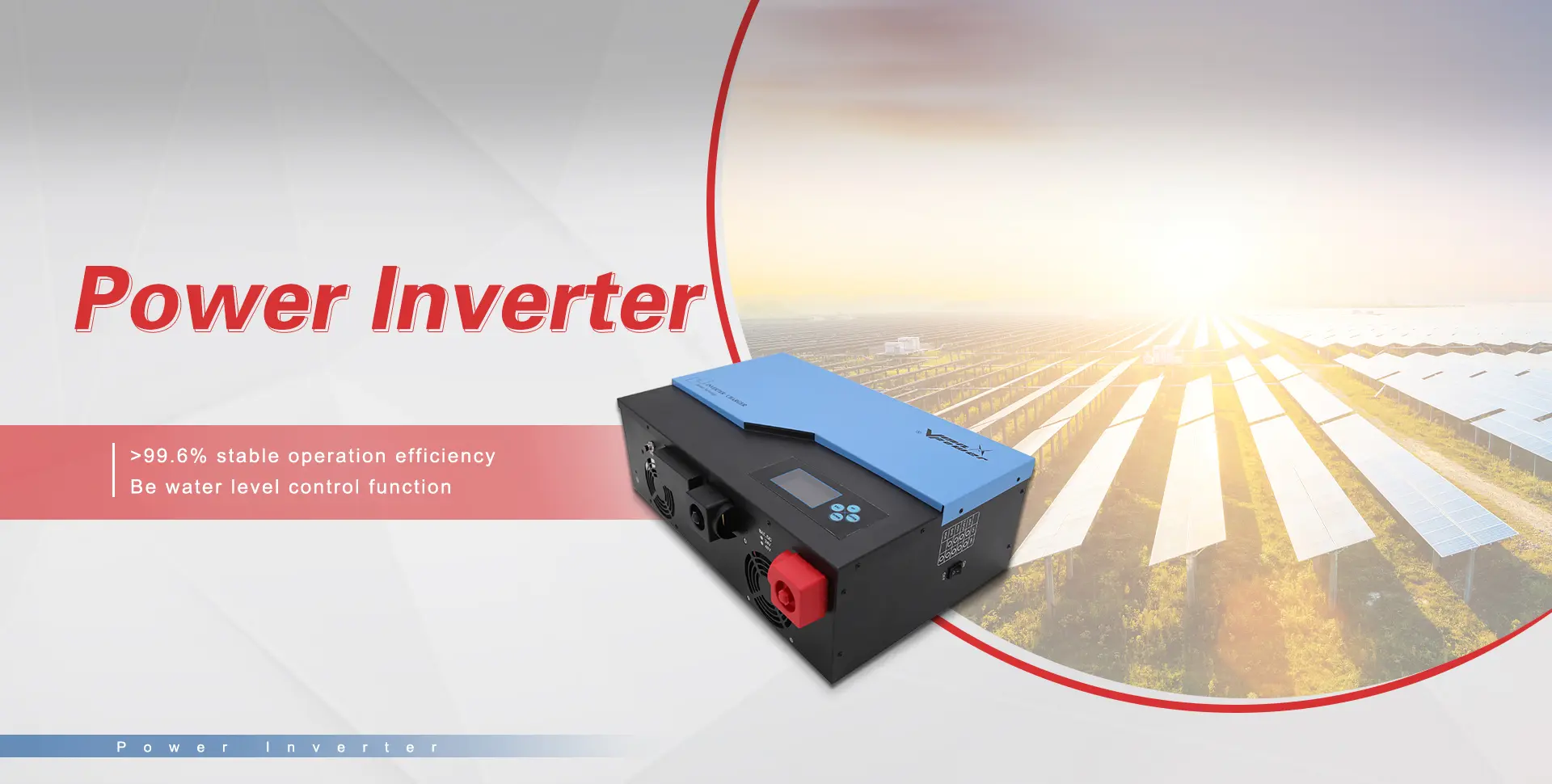
Lightweight, high-density transformerless power inverters with 98.4% peak conversion efficiency and dual MPPT trackers for modern residential rooftop projects.
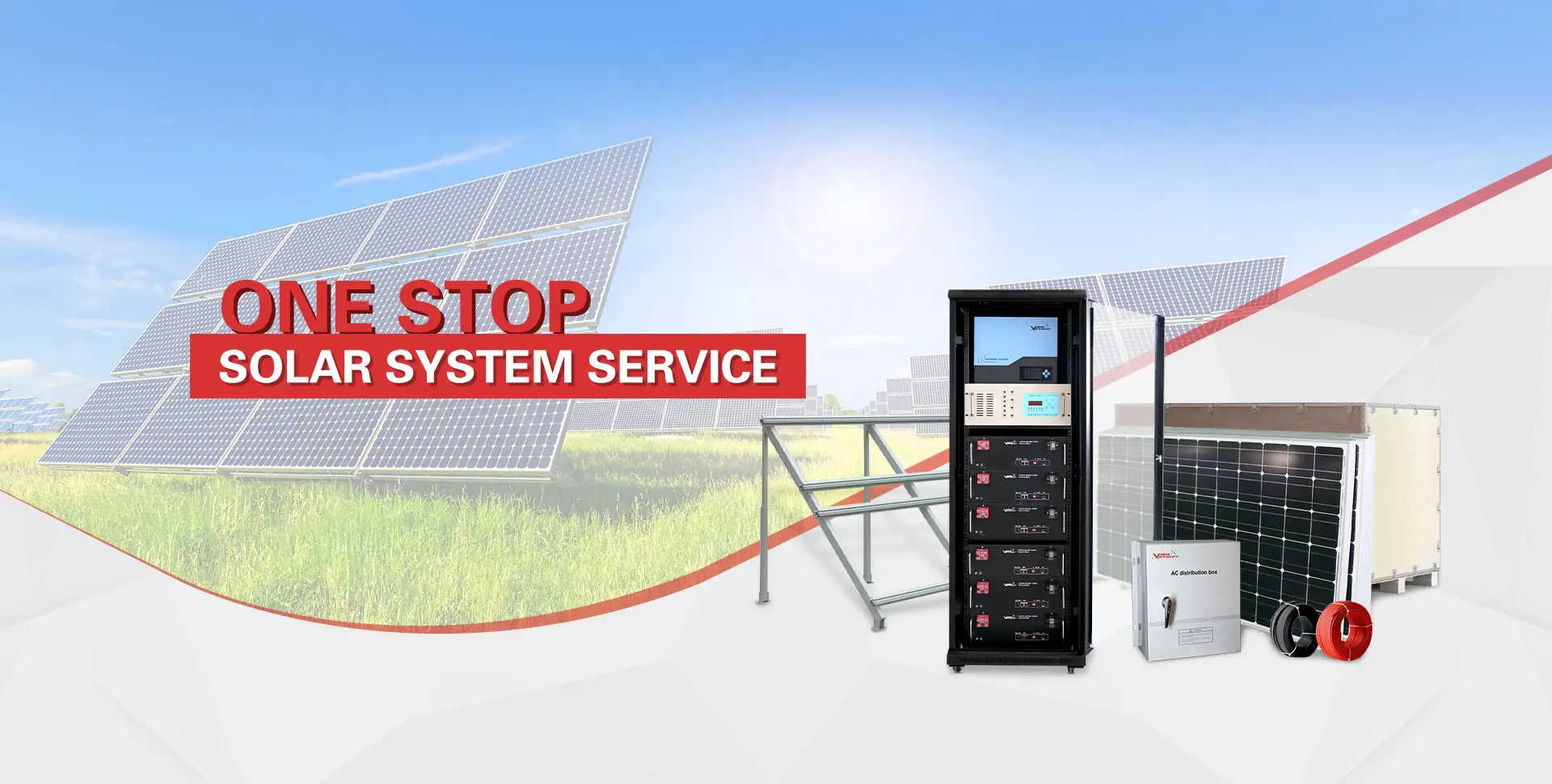
Deep-cycle LiFePO4 rack-mounted and gel battery configurations with smart BMS thermal balance protection, designed for multi-megawatt commercial backup and off-grid resilience.
The Quantitative Cost of PV Soiling: From Ray Dispersion to Cell Degradation
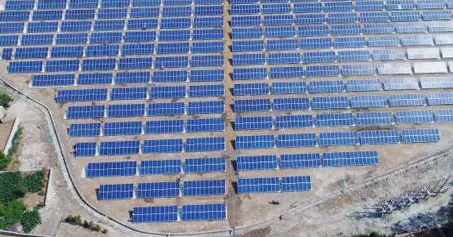
In global utility-scale and commercial distributed solar installations, soiling loss is the single largest controllable cause of generation derating. Atmospheric airborne dust, agricultural tillage particulates, desert silica aerosolization, marine sodium salt crusts, and industrial hydrocarbon residues form a calcified opaque crust across the solar panel front glass. Field data compiled across the Middle East, North Africa (MENA), Northern China, and Southern California indicates that uncleaned photovoltaic strings suffer an output degradation of 0.35% to 1.8% daily during dry seasons. Over a consecutive 60-day dry period, unmanaged soiling precipitates more than a 28% total revenue reduction.
Beyond bulk power output attenuation, non-uniform dirt distribution presents severe structural risks. When partial shading occurs from cementation, bird droppings, or uneven dust accumulation, internal cell diode bypass triggers uneven string resistance. The blocked semiconductor cells transition from power generators into localized electrical consumers, generating extreme thermal hot-spots (exceeding 140°C). This severe thermal stress rapidly accelerates Ethylene Vinyl Acetate (EVA) discoloration, accelerates Potential Induced Degradation (PID), causes delamination, and risks permanent micro-cracking across solar wafer substrates.
28.4%Peak Yield Restored
< 0.15LWater Per Module (Hybrid Mode)
4.5 MosTypical Equipment ROI Payback
ZeroMicro-Scratch Abrasion Rate
Precision Mechanical Engineering
Filament Tribology, Motor Dynamics & Structural Architecture
Engineering factory standards for high-tensile cleaning brushes designed specifically for high-efficiency anti-reflective (ARC) tempered solar glass.
Polyamide 66 & DuPont Fiber Blend
Traditional polypropylene or coarse nylon filaments cause micro-abrasions on antireflective nanocoatings over hundreds of wash cycles. Our factory-tufted rollers utilize high-purity imported Polyamide 66 mixed with custom PBT memory polymers. Designed with rounded filament tips (0.08–0.12mm diameter), this structural material maintains a Mohs surface hardness below 2.5, delivering zero surface scouring on 6.0+ Mohs solar tempered glass.
Counter-Rotating Hydro-Drive Motors
Our dual-head and cylindrical roller units use high-torque, brushless DC internal permanent magnet (IPM) electric motors encapsulated in an IP68 hermetically sealed alloy casing. Counter-rotating dynamic heads eliminate axial kickback forces, delivering neutral operator stabilization even when handling 8-meter extended telescopic carbon-fiber rods on 35-degree pitched commercial roofs.
Antistatic Triboelectric Dissipation
In ultra-arid regions, dry brush friction builds high electrostatic surface potential across module glass, immediately attracting airborne fine silica dust after cleaning. Multifit brush filaments feature proprietary conductive carbon filaments woven into the tufting arrays, continuously grounding electrostatic charges to prevent post-cleaning particulate re-attraction.
China Factory Manufacturing Prowess, Direct B2B Supply & Resilience
Why Tier-1 solar distributors, EPC contractors, and maintenance asset owners in 80+ countries bypass intermediaries to secure direct factory procurement from Beijing.
Integrated Capital, End-to-End Vertical Production, and In-House R&D
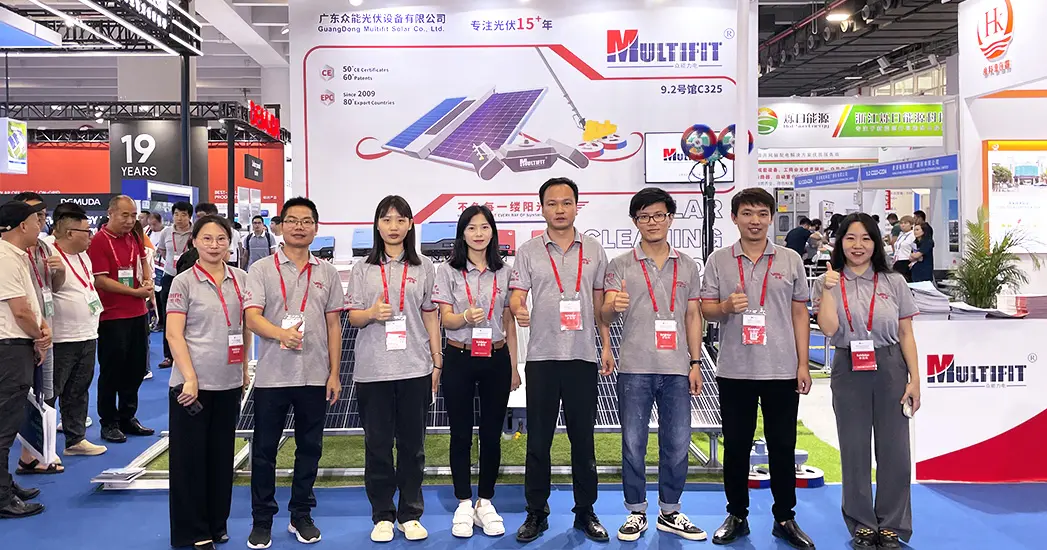
Founded in 2009 and situated inside the high-tech Beijing Economic & Technological Development Zone (publicly traded under equity code 280768), Beijing Multifit Electrical Technology Co., Ltd. operates an integrated, high-capacity manufacturing base for solar clean-tech hardware. While trading brokers re-package disparate parts from outsourced workshops, our factory controls the entire manufacturing lifecycle: from multi-axis CNC filament tufting, drive motor winding, carbon-fiber structural composite curing, to electronic circuit design for smart power management systems.
Our localized industrial cluster in China delivers unmatched supply chain predictability. We maintain strategic stockpiles of Japanese Toray-grade carbon-fiber weaves, brushless drive coils, and raw Polyamide polymers. This vertical engineering integration eliminates intermediate markups, guaranteeing international distributors a 20% to 35% margin advantage while providing custom OEM/ODM rapid prototyping turnaround within 7 business days.
Direct Audited Quality Assurance: Full compliance with ISO 9001 quality standards and ISO 14001 environmental protocols. Every batch undergoes 500-hour continuous salt spray exposure, dynamic motor IP68 submergence validation, and 100,000-cycle shaft fatigue cycling before factory dispatch.
Soiling Pattern: Heavy sub-micron silica dust buildup accompanied by frequent high-velocity desert sandstorm accumulation. Lack of regional fresh water supplies makes conventional washing cost-prohibitive. Operational Strategy: Deploy waterless dry-cleaning cylindrical brush rollers coupled with robotic PV cleaners during early dawn before humidity condenses dust into hardened mud crusts.
Industrial Manufacturing & Steel Works (Chemical Soot)
Soiling Pattern: Acidic airborne particles, fine grease deposits, coal particulate precipitates, and chemical smog that bake onto module glass surfaces under high ambient heat. Operational Strategy: Utilize dual-headed counter-rotating cleaning brushes using specialized neutral surfactant injection via integrated water-feed channels at 0.35 bar fluid pressure.
Agri-Photovoltaics & Coastal Bird Habitats
Soiling Pattern: Highly corrosive uric-acid bird droppings, pollen biofilms, and high-salinity sea mist crusting that quickly create hot spots. Operational Strategy: High-speed nylon brush scrubbing with targeted point-jet pressurized water nozzles to break down hardened calcified deposits without inducing glass surface fatigue.
Cold Climates & Heavy Snow Drifts
Soiling Pattern: Fresh snowfall cover that freezes into reflective ice sheets, blocking 100% of solar irradiance and placing static weight strain on tracking mounts. Operational Strategy: Deploy stiff-fiber snow-clearing brush attachments to rapidly break loose powder before sub-zero temperatures bond frost directly to module glass.
R&D Horizon · 10-Year Technology Roadmap
Technological Roadmap & Future Outlook: The Next Decade of Solar O&M
How the fusion of computer vision, ultrasonic wave generation, self-guiding drones, and telemetry transforms manual cleaning brushes into zero-emission autonomous cleaning nodes.
The Evolution from Manual Telescopic Rods to Edge-AI Autonomous Cleaning Fleets
The photovoltaic Operations and Maintenance (O&M) sector is undergoing rapid industrial automation. Multifit’s advanced engineering research laboratories are aggressively pioneering three foundational frontiers:
Phase 1 (2025–2027): AI-Driven Optical Soiling Density Telemetry: Integration of low-power edge optical sensors directly into our handheld brush heads and automated robotic carriers. Real-time backscatter spectrometry analyzes exact soiling density, automatically adjusting brush rotational RPM (from 150 to 450 RPM) and modulating water injection rates. This matches the chemical nature of localized surface dirt while preventing unnecessary mechanical contact.
Phase 2 (2028–2030): Water-Free Ultrasonic-Assisted Rotary Action: Developing hybrid brush assemblies that combine high-frequency (28kHz–40kHz) acoustic cavitation transmitters within the brush core. This structural innovation breaks surface particulate electrostatic bonds ahead of rotating filaments, eliminating water dependency entirely across hyper-arid utility installations.
Phase 3 (2031–2035): Swarm Robotics & Autonomous Cross-Row Drone Deployment: Complete automated cross-row leaping systems where cleaning crawler robots navigate multi-string solar arrays without manual rigging. Autonomous dock recharging supported by our matched on grid solar systems and lithium storage arrays ensures year-round zero-human O&M.
Regulatory Certifications & Bankability
Comprehensive Compliance, International Standards & Quality Assurances
Guaranteed bankability and compliance validation to satisfy EPC asset underwriters, utility insurers, and international trade border regulations.
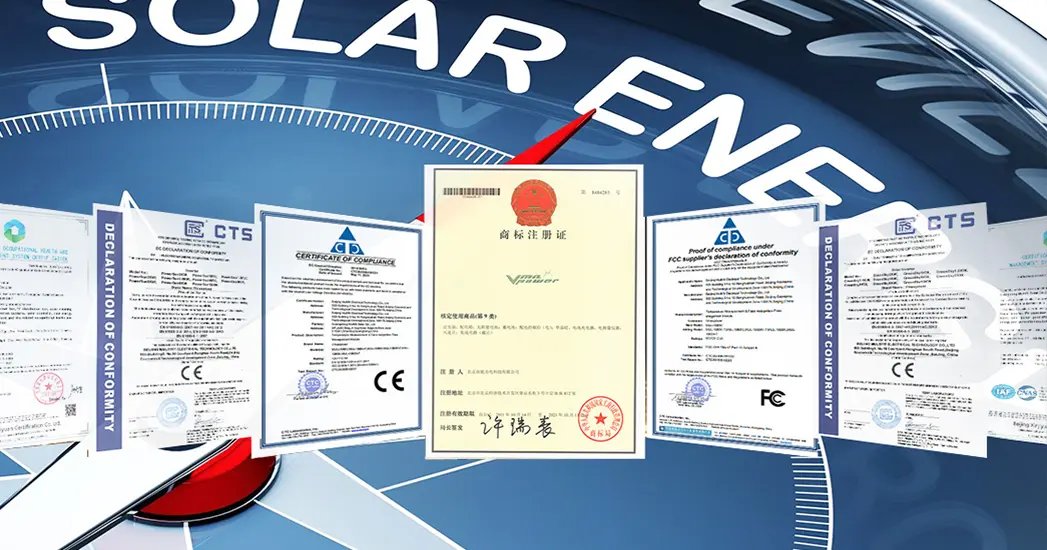
CE Mark & European Conformity
Over 20 CE certificates held across our low voltage electrical tools, motor assemblies, and high frequency power systems. Certified under Electromagnetic Compatibility (EMC) Directive 2014/30/EU and Low Voltage Directive (LVD) 2014/35/EU.
TUV Rheinland & IEC Standards
Audited strictly under IEC 61215 and IEC 61730 module reliability testing protocols. Our cleaning equipment proves complete non-abrasive integrity across glass coatings, preventing micro-stress fractures and avoiding solar module manufacturer warranty voidance.
ISO 9001 / ISO 14001 Audited Facility
Our manufacturing and R&D center operates verified total quality management systems. All incoming raw materials, composite curing, motor windings, and tufting processes are fully trackable via automated ERP serial batching.
20+ National Technology Patents
Proprietary patented advancements spanning structural anti-fatigue carbon fiber joints, dual water-air balance feed channels, and low-drag cylindrical brush core designs ensure authentic factory IP protection for global private label distributors.
Technical Due Diligence
Frequently Asked Questions: Wholesale Solar Cleaning Hardware
In-depth engineering, procurement, and logistics answers compiled directly by Beijing Multifit Electrical Technology export application engineers.
Does rotating brush friction damage the Anti-Reflective (ARC) glass coating on Tier-1 panels?
No. Standard Tier-1 solar panels feature a micro-porous silica or titanium dioxide Anti-Reflective Coating (ARC) with a Mohs surface hardness rating between 5.5 and 6.5. Multifit brush bristles are exclusively synthesized from Polyamide 66 and PBT filaments with rounded tips, possessing a Mohs hardness index under 2.5. Comprehensive independent tests conducted under IEC 61215 parameters show zero measurable micro-scratching, zero glass optical transmission degradation, and zero antireflective delamination after 1,000+ continuous washing cycles.
What are the primary operational differences between dual-headed rotary brushes and cylindrical rollers?
Dual-headed rotary brushes feature two circular counter-rotating discs that rotate horizontally. This design neutralizes centrifugal rotational force, making them ideal for manual operators using telescopic poles (3.5m to 7.5m) across pitched residential roofs and uneven commercial arrays. Cylindrical roller brushes produce a linear sweeping motion, making them ideal for continuous horizontal tracking on ground-mounted utility arrays or crawler-type autonomous robots where long, continuous rows require fast coverage.
How can overseas distributors obtain OEM private labeling and custom configuration adjustments?
As a direct manufacturer, VMAX POWER (Multifit) supports complete OEM/ODM customization. This includes custom molded pole colors, silk-screened brand logos, custom lithium battery pack enclosures, and tailored brush filament densities suited for regional soil conditions. We provide private label packaging, custom branded user manuals, and regional electrical adapter compliance (EU, US, AU, UK standards) with a baseline OEM minimum order quantity (MOQ) as low as 10 units.
Can cleaning brushes operate in dry-cleaning mode without any water connection?
Yes. Our brushes support dry-cleaning operations in arid and desert regions where water supplies are restricted. For dry operation, we integrate antistatic conductive carbon fibers into our Polyamide filament blend to prevent triboelectric static charging, allowing dust to slide away smoothly. However, where calcified bird droppings or sticky industrial deposits are present, intermittent damp cleaning (using 0.15L of water per module) is recommended to safely loosen debris.
What power sources are supported for handheld telescopic cleaning brush kits?
Our systems provide versatile tri-mode power connectivity: (1) A lightweight, wearable lithium-ion backpack battery pack providing 4 to 8 hours of continuous field operation; (2) A regulated 110V/220V AC-to-DC 24V power adapter for sites with available utility or generator power; and (3) Direct 24V/48V vehicle-mounted battery clip converters for mobile truck-mounted wash operations.
What is the typical manufacturing lead time and export sea/air freight dispatch capability?
Standard catalog orders for telescopic brush kits are dispatched from our Beijing warehouse within 3 to 7 business days. Custom OEM container-volume orders (such as 20ft or 40ft HQ containers) have a manufacturing cycle of approximately 15 to 21 calendar days. We coordinate international export shipping via Tianjin port or Beijing air cargo hubs, supporting EXW, FOB, CIF, and full DDP delivery straight to your distribution warehouse.
Comprehensive Solar Generation & Lighting Portfolio
Balance of System: Complete Photovoltaic Infrastructure Hardware
Complete your supply chain with our factory-direct power inverters, solar panels, storage components, and industrial commercial solar lighting.
Heavy-Duty
Power Inverter
Industrial-grade power inverters with pure sine wave output, advanced digital DSP control, and high operational reliability across demanding micro-grid projects.
High-efficiency N-Type TOPCon and PERC solar panels with multi-busbar cell architecture, providing low temperature coefficients and 25-year linear performance warranties.
Ultra-fast maximum power point tracking (MPPT) charge controllers featuring 99.5% tracking efficiency, multi-stage battery charging algorithms, and remote RS485 telemetry.
High-lumen outdoor solar lighting luminaires equipped with integrated LiFePO4 batteries, PIR motion detection, and dusk-to-dawn intelligent brightness control.
Commercial-grade die-cast aluminum solar flood lighting fixtures with ultra-wide angle optics, remote timing controls, and high-efficiency external solar panels.
Partner Directly with China's Premier Clean-Tech Manufacturer
Accelerate your project returns, elevate field O&M productivity, and secure volume OEM factory pricing. Connect directly with our Beijing engineering and export sales specialists for custom quotes and project schematics.