Integrated cell-to-pack engineering and system matched components engineered to eliminate field commissioning friction for EPC contractors, installers, and global renewable energy distributors.
Deep-cycle lithium iron phosphate (LiFePO4) rack-mount and wall-mounted units rated for 6000+ cycles at 80% DoD with smart CANbus/RS485 BMS.
Source Battery Directly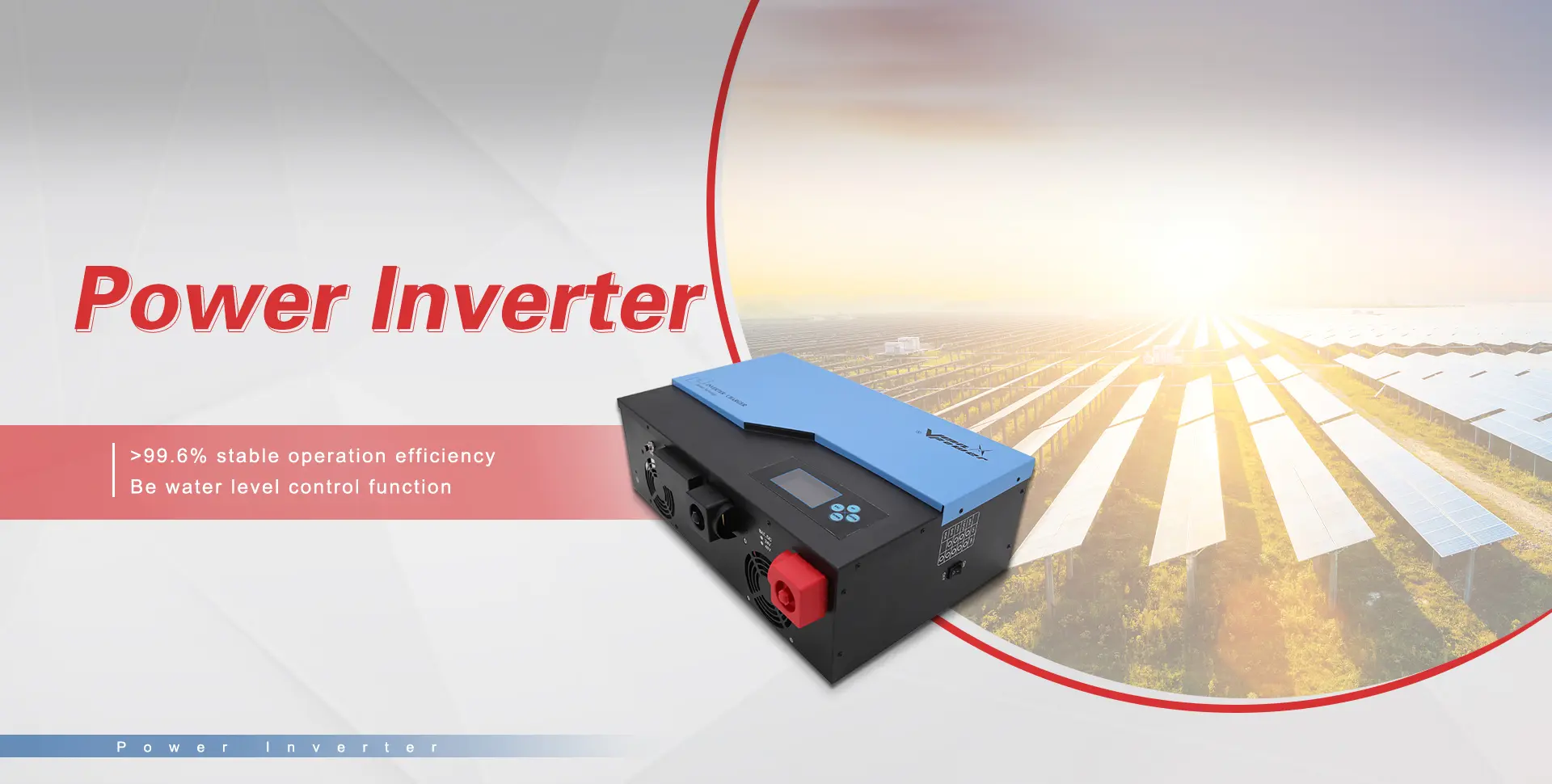
Bi-directional hybrid ESS inverters offering seamless 10ms UPS-class transfer, high MPPT tracking efficiency, and multi-protocol battery communications.
Explore ESS Inverters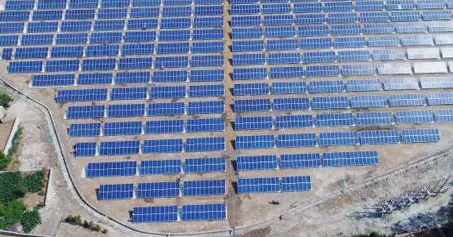
Pre-engineered stand-alone microgrid systems integrating LiFePO4 battery banks, pure sine wave power inverters, and heavy-duty MPPT charge controllers.
Configure Off-Grid Kits
Utility-synchronized commercial and residential rooftop power stations engineered for maximized annual yield, rapid payback, and zero-export curtailment.
Get On-Grid Systems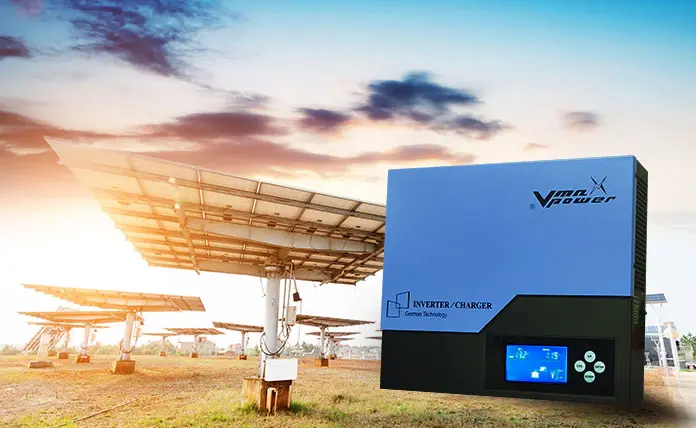
Engineered with copper-wound toroidal transformers and a 32-bit DSP processor capable of enduring 300% peak surges from motor, pump, and HVAC inductive loads.
Review LF Inverters
Lightweight, high-density transformerless power conversion with high peak conversion efficiency, wide MPPT voltage bands, and quiet residential operation.
Request HF Specs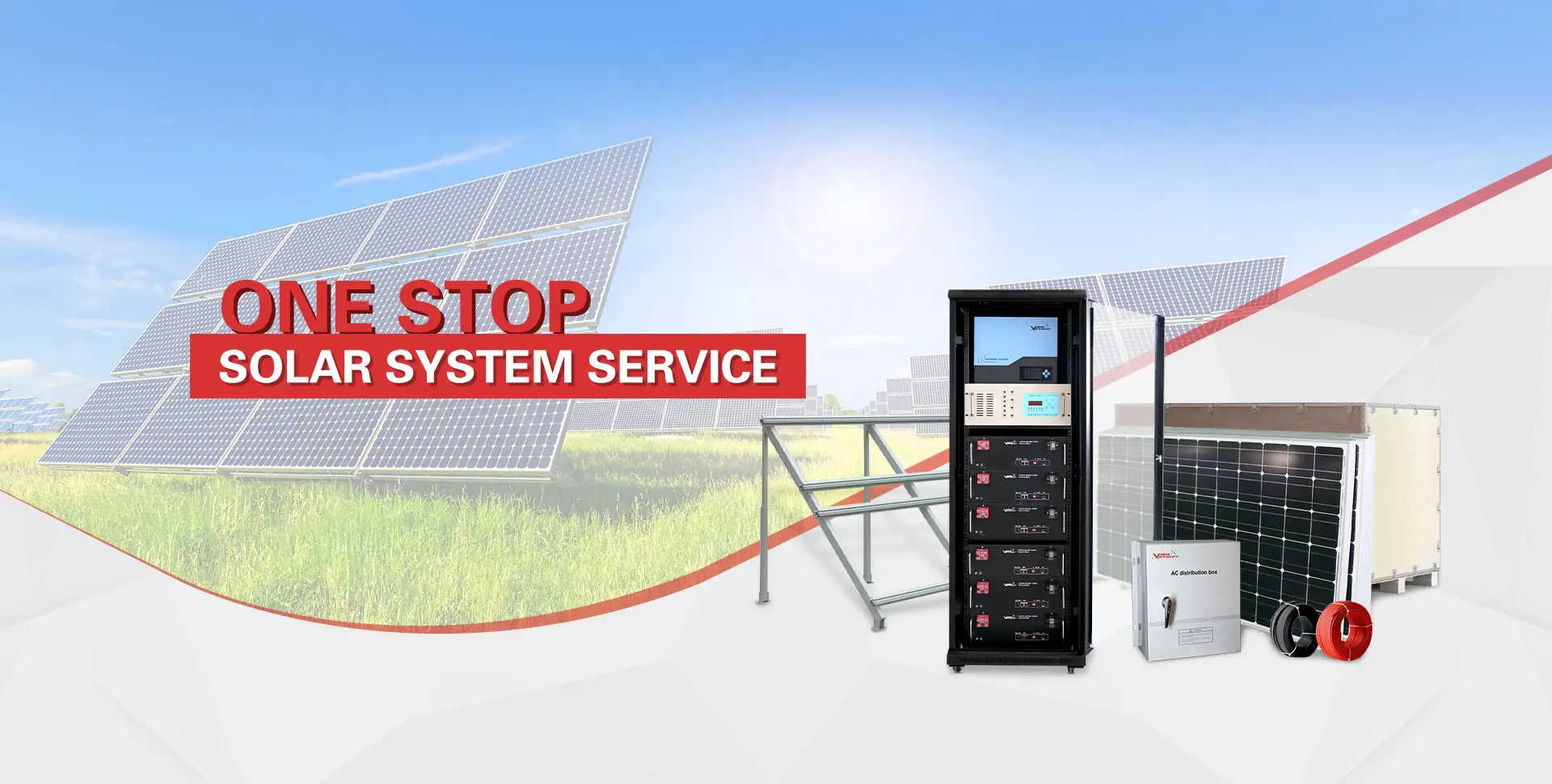
Unified BoS (Balance of System) packages combining solar panels, LiFePO4 batteries, inverters, racking, and distribution panels verified under unified factory QC.
View Complete Systems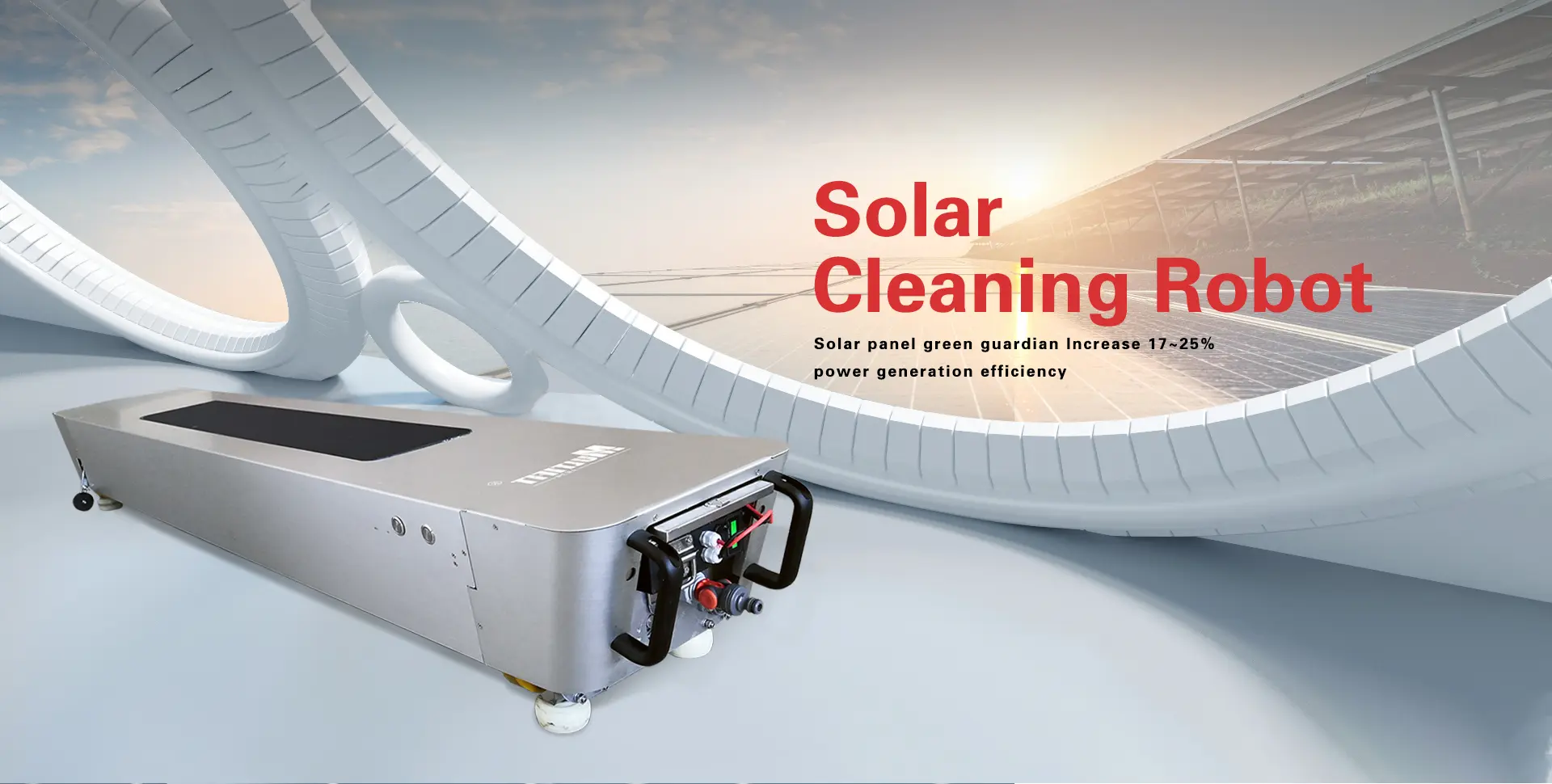
Crawler-type automated dry and water cleaning robots engineered to eliminate soiling degradation and recover up to 25% lost generation on desert and industrial PV roofs.
Explore Robotic O&MA technical assessment of energy transition economics, grid stability imperatives, and the phase-out of legacy lead-acid chemistry across international markets.
The global energy storage landscape has experienced a monumental paradigm shift over the past decade. As renewable penetration expands exponentially across North America, Europe, Australia, and developing microgrid territories across Africa, Asia, and Latin America, battery storage has evolved from an optional backup accessory into the core infrastructure underpinning modern grid stability. Lithium Iron Phosphate (LiFePO4, or LFP) has definitively surfaced as the undisputed global gold standard chemistry for stationary solar energy storage systems (BESS). Unlike traditional lead-acid chemistries—which suffer from acute sulfation, short cyclic endurance under high Depth-of-Discharge (DoD), toxic environmental profiles, and profound thermal vulnerabilities—modern lithium-ion battery architectures deliver unprecedented levelized cost of storage (LCOS) metrics.
In both grid-tied commercial-industrial (C&I) environments and off-grid remote installations, energy security demands instantaneous ramp rates, sustained cyclic resilience, and zero thermal runaway risk. Industrial plants face surging demand charges and peak utility tariffs, compelling the installation of behind-the-meter (BTM) storage assets designed for peak shaving, demand response, and reactive power compensation. Concurrently, mission-critical infrastructure such as rural microgrids, base transceiver stations (telecom towers), island desalination plants, and agricultural irrigation pumps require uninterrupted 24/7/365 autonomy. LiFePO4 cells, characterized by an olivine crystal lattice with robust P-O covalent bonds, do not liberate oxygen upon thermal or electrical abuse, making them intrinsically safer than nickel-manganese-cobalt (NMC) chemistries while providing superior operational lifespans exceeding 6,000 cycles at 80% to 90% DoD.
While the upfront capital expenditure of a China-manufactured lithium battery storage system was historically perceived as premium, its Levelized Cost of Storage (LCOS) is roughly one-third that of AGM or tubular gel lead-acid. LiFePO4 delivers 4 to 6 times the cumulative lifetime kilowatt-hour throughput per installed dollar.
Solar arrays produce high midday power peaks that lead-acid systems cannot absorb due to chemical charge acceptance ceilings. Lithium-ion architectures reliably accommodate 0.5C to 1C charge rates, enabling rapid re-energization during brief sunlight windows or off-peak grid replenishment cycles.
Thermal stability is the single most scrutinized procurement metric for EPC safety engineers. LiFePO4 cells withstand thermal abuse up to 270°C without exothermically decomposing, rendering them safe for indoor residential, commercial basements, and containerized utility substations.
How upstream mineral refining, automated prismatic cell assembly, and precision laser welding deliver unmatched price-performance ratios for international buyers.
China's preeminence in the lithium-ion solar battery manufacturing sector is not merely a matter of labor economics; it is an industrial ecosystem advantage built across decades of disciplined capital investment and vertical supply chain integration. From the refining of cathode precursor materials (lithium carbonate and iron phosphate salts) and synthetic anode graphites to the automated fabrication of high-purity copper foil, separator films, and electronic BMS semiconductors, Chinese manufacturing hubs provide end-to-end component cohesion that Western or regional assemblers cannot duplicate at scale.
At Beijing Multifit Electrical Technology Co., Ltd. (VMAX POWER), founded in 2009 in the Beijing Economic & Technological Development Zone and listed under equity code 280768, battery pack integration leverages this national supply chain maturity. Instead of sourcing disparate third-party modules, our manufacturing facilities utilize Grade-A prismatic LiFePO4 cells matched using high-precision automated sorting systems that screen for open-circuit voltage (OCV), internal AC impedance (IR), and delta capacity within microscopic tolerances of ±1mV and ±0.1mΩ. This cellular matching ensures that every multi-cell pack maintains equilibrium over years of heavy cycling, preventing premature capacity degradation caused by cell divergence.
Factory Architectural Insight: High-reliability battery pack engineering requires more than high-grade cells. Automated fiber-laser busbar welding eliminates manual soldering resistance points, preventing localized heating during sustained 100A+ discharge events. Integrated aerosol fire-suppression modules and multi-point negative temperature coefficient (NTC) thermistors provide dual-layer physical and firmware security directly at the pack level.
Cell grading utilizes high-throughput 5V/50A automated charge-discharge testers, subjecting incoming prismatic cells to rigorous capacity calibration and high-temperature aging chambers to weed out infantile defects.
Robotic galvanometer laser welders fuse nickel-plated copper busbars to cell terminals. This creates a low-resistance, vibration-proof metallurgical bond ideal for maritime container freight and harsh deployment environments.
Our in-house developed Battery Management Systems feature dual active/passive balancing, short-circuit cutoffs within 300 microseconds, and universal firmware compatibility with tier-1 international inverter protocols.
Every manufactured battery pack completes a 100% full-depth cycle soak test before packaging. Comprehensive test reports documenting serial numbers, internal resistance, and terminal voltage curves are exported for buyer provenance.
Real-world application topologies demonstrating how VMAX POWER lithium systems are engineered to withstand ambient extremes from the Gobi Desert to sub-zero alpine terrains.
Desert environments in the Middle East, Central Asia, and Australia present blistering 50°C ambient temperatures alongside fine particulate abrasive dust. Multifit pairs IP65-sealed LiFePO4 battery enclosures featuring intelligent thermal management with automated robotic cleaning systems.
In coastal zones and remote archipelagos, weak diesel-reliant power structures grapple with salt mist corrosion and erratic generator maintenance costs. Our lithium storage banks incorporate conformal-coated PCB electronics and corrosion-proof powder-coated enclosures.
Standard lithium batteries cannot accept charging currents below 0°C without risking irreversible lithium plating and internal dendritic short-circuits. Multifit incorporates built-in PTC self-heating film blankets powered directly by PV input.
Strategic perspectives on cell chemistry roadmaps, high-voltage architecture efficiencies, and edge-computing battery intelligence.
The energy storage industry is progressing along three revolutionary technological trajectories: the diversification of core chemistries (specifically the commercial scale emergence of Sodium-ion cells alongside high-density LiFePO4), the transition from low-voltage (48V/51.2V) to High-Voltage (HV 200V–1000V) DC topologies, and the migration from passive BMS monitoring to proactive, cloud-connected AI diagnostic systems.
In high-capacity commercial and industrial applications, low-voltage 48V systems encounter severe cabling limits due to high operating currents (e.g., transmitting 50 kW at 48V requires over 1,000 Amperes, requiring heavy copper busbars and producing heavy line losses). Modern high-voltage lithium battery racks operate at 300V to 800V DC, reducing operating currents by over 80%. This architectural evolution cuts $I^2R$ copper dissipation losses, slashes BoS cabling costs, and enables round-trip conversion efficiencies exceeding 98% when linked to transformerless hybrid inverters.
| Storage Parameter | Lithium Iron Phosphate (LiFePO4) | Sodium-Ion (Na-Ion) | Ternary Lithium (NMC/NCA) | Tubular Gel / Lead-Acid |
|---|---|---|---|---|
| Nominal Cell Voltage | 3.2 V | 3.1 V | 3.6 V - 3.7 V | 2.0 V |
| Cycle Life (80% DoD) | 6,000 - 8,000 Cycles | 3,000 - 4,500 Cycles | 1,500 - 2,500 Cycles | 800 - 1,500 Cycles |
| Thermal Runaway Onset | ~270°C (Extremely Stable) | ~260°C (High Stability) | ~150°C - 210°C (Volatile) | Thermal Gassing & Dry-out |
| Sub-Zero Charge Window | With Heating: -20°C to +55°C | Inherent: -20°C to +60°C | -10°C to +45°C | Severe capacity drop <0°C |
| Raw Material Abundance | Abundant (Iron/Phosphorus) | Ubiquitous (Global Salt Reserves) | Constrained (Cobalt/Nickel) | Toxic Lead Regulations |
| Standard Solar BESS Role | Industrial Standard Baseline | Emerging Cold & Low-Cost ESS | EV & Portable Power Focused | Legacy Replacement Phase-out |
Critical procurement criteria, certification audits, and hazardous goods logistics protocols required for seamless customs clearance and tender compliance.
Global grid codes and local electrical authorities mandate stringent compliance. Importers must verify that documentation originates from certified ISO 17025 accredited laboratories (e.g., TUV Rheinland, SGS, DEKRA).
Lithium-ion batteries are classified as Class 9 Dangerous Goods under maritime code (UN 3480). Non-compliant documentation leads to catastrophic port holds, customs seizures, or carrier refusal.
Transparent manufacturers provide linear degradation guarantees tied to specific operating conditions (e.g., 25°C ambient, 0.5C charge/discharge, 80% DoD). Beware of undefined "10-year warranties" lacking throughput limits.
A publicly listed clean-tech manufacturer (Equity Code: 280768) delivering turnkey photovoltaic systems, high-surge power inverters, and lithium energy storage across 80+ countries since 2009.
Headquartered in the Beijing Economic & Technological Development Zone, Beijing Multifit Electrical Technology Co., Ltd. has stood at the technological forefront of China’s solar and inverter engineering industry for over 15 years. Operating under the globally registered brand VMAX POWER, our enterprise bridges pure scientific research with rugged industrial execution. We do not operate as an intermediary trading enterprise; our comprehensive infrastructure encompasses in-house power electronics laboratories, multi-axis robotic cleaning development workshops, and precision battery pack production facilities.
Multifit holds over 20 proprietary design and utility patents, 20+ verified CE conformity certifications, along with international TUV, IEC, ISO 9001, and ISO 14001 factory audits. From custom private-label OEM manufacturing for tier-1 distributors in Europe and North America to delivering containerized energy storage power plants for government rural electrification initiatives, our senior engineering staff guides projects from initial load profiling through complete Balance-of-System commissioning.
Clear, engineer-verified answers to common technical, logistics, and system integration questions raised by overseas EPC contractors and wholesale distributors.
Capacity (kWh) = [Daily Load (kWh) × Days of Autonomy] ÷ (Usable DoD × Inverter RTE). For instance, for a 20 kWh daily consumption target with 2 days autonomy on a LiFePO4 bank operating at 90% DoD and 94% round-trip efficiency: (20 × 2) ÷ (0.90 × 0.94) ≈ 47.28 kWh. Our engineering department reviews customer single-line diagrams (SLDs) and load schedules without fee.
Expand your sourcing procurement with factory-certified solar panels, automated maintenance tools, dedicated controllers, and autonomous commercial lighting.
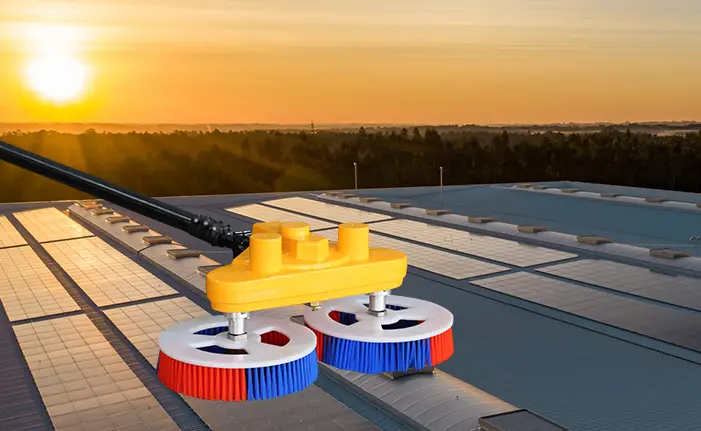
Handheld dual-head counter-rotating power brushes with telescopic carbon fiber poles designed for rapid, scratch-free rooftop array maintenance.
Source Clean Brushes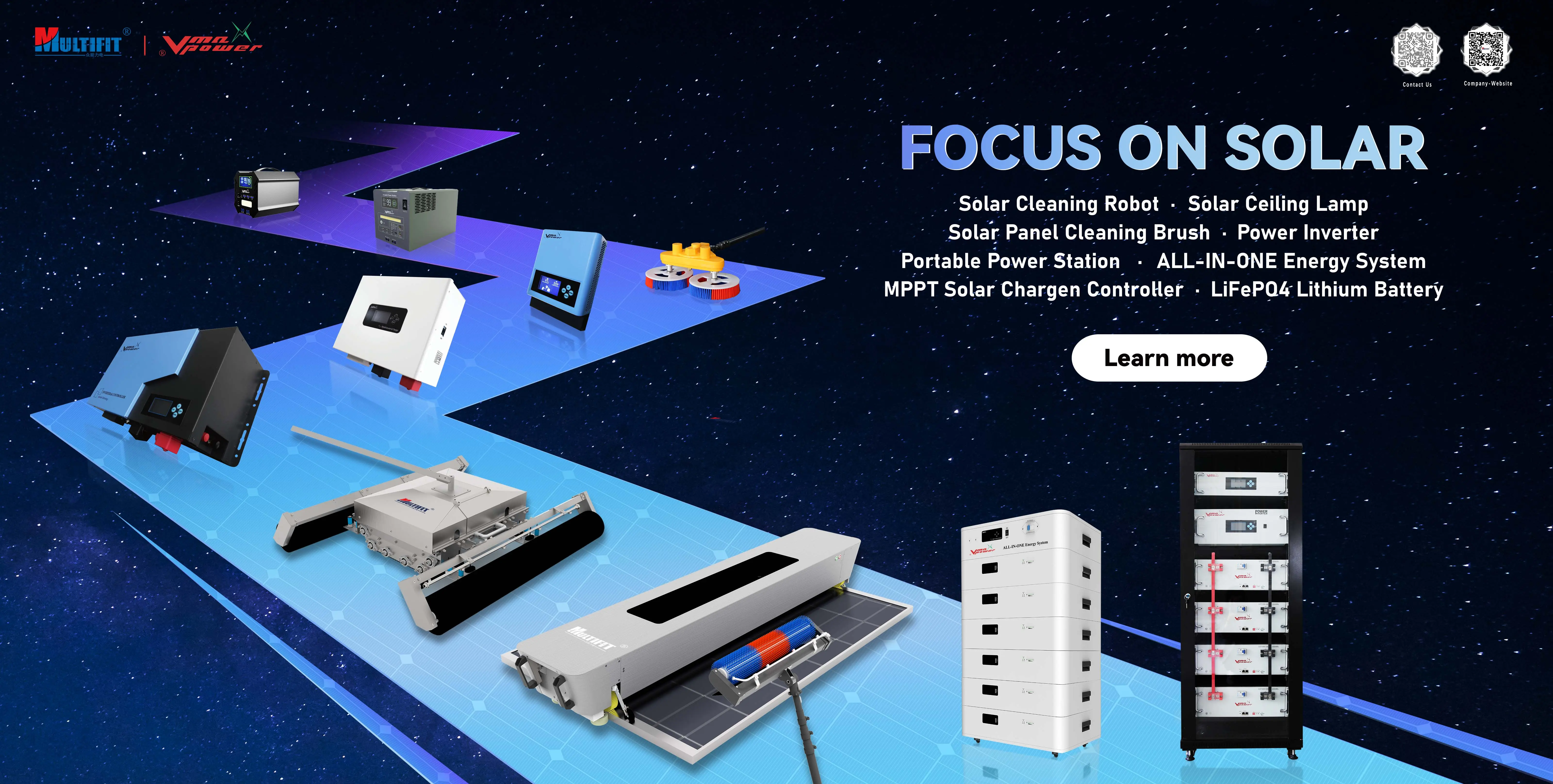
Stationary and tracked automated cleaning systems custom-engineered to eliminate soiling degradation on utility-scale and C&I rooftop plants.
View Clean Systems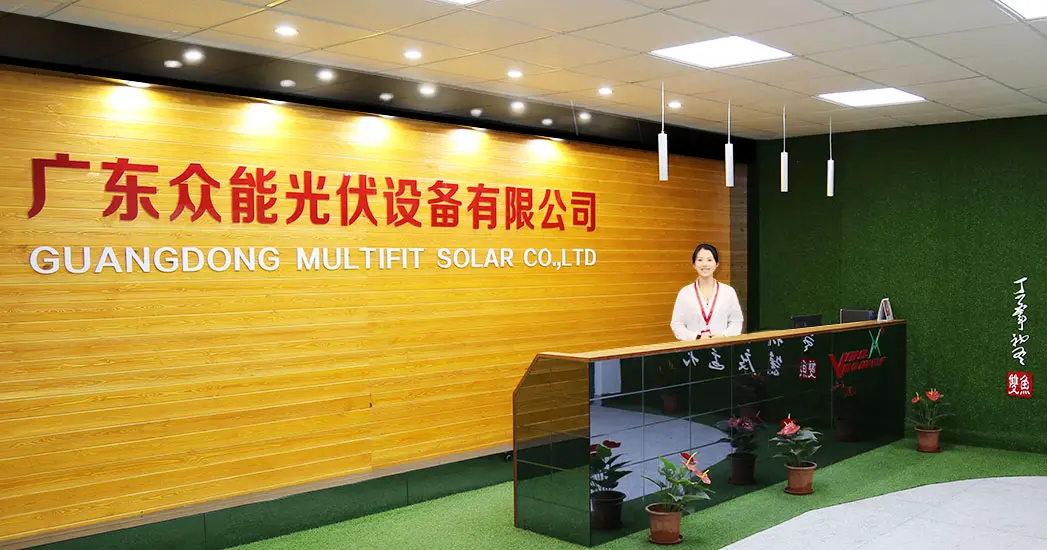
Industrial pure sine wave DC-to-AC power inverters delivering clean, grid-quality electricity with minimal total harmonic distortion (<3% THD).
Explore Inverters
Tier-1 high-efficiency monocrystalline TOPCon and PERC photovoltaic modules engineered with multi-busbar (MBB) architecture for maximum photon conversion.
Source Solar Panels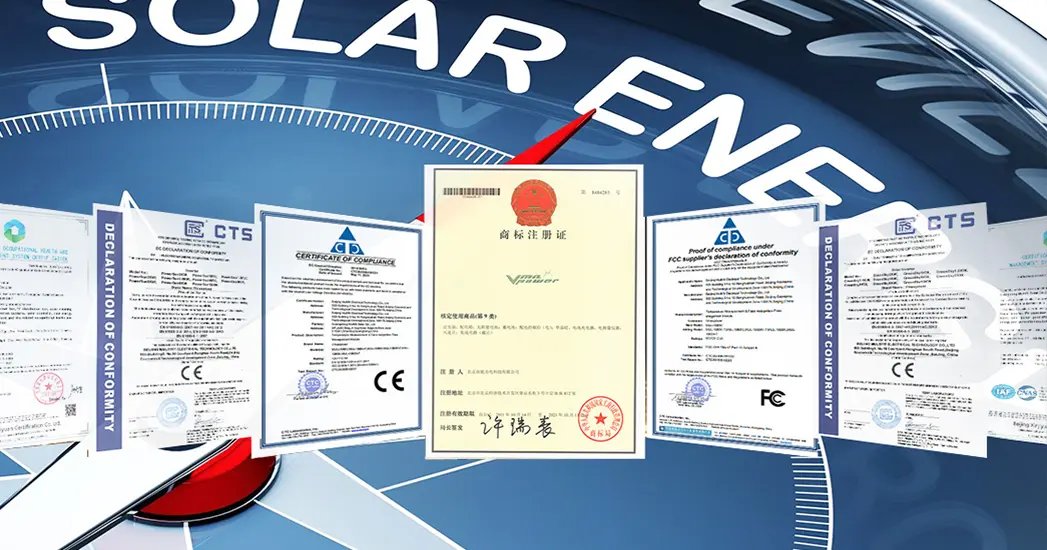
Advanced MPPT charge controllers delivering 99.5% tracking efficiency with automatic voltage auto-sensing and customizable multi-stage lithium charging profiles.
View MPPT Controllers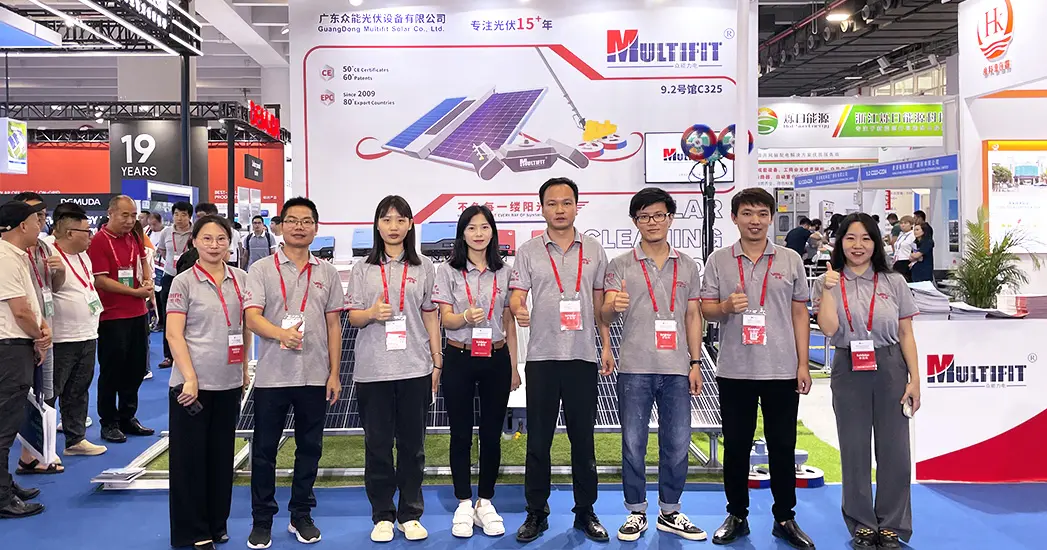
All-in-one commercial solar streetlights consolidating high-lumen Philips LED chips, internal LiFePO4 batteries, and radar motion dimming sensors.
Source Integrated Lights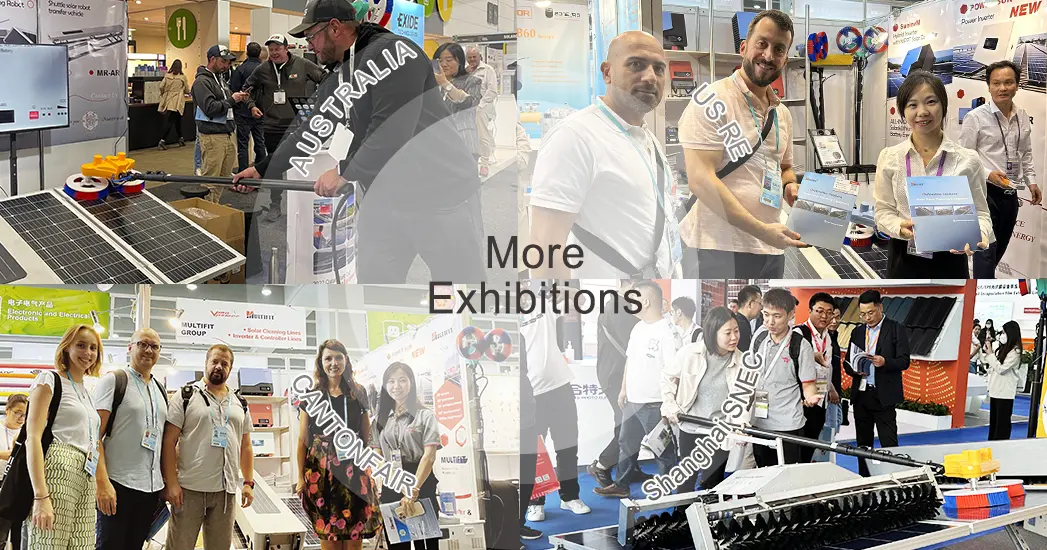
Heavy-duty die-cast aluminum solar flood lighting fixtures built with IP67 waterproofing, wide-angle optics, and dedicated external solar charging panels.
Request Floodlight Specs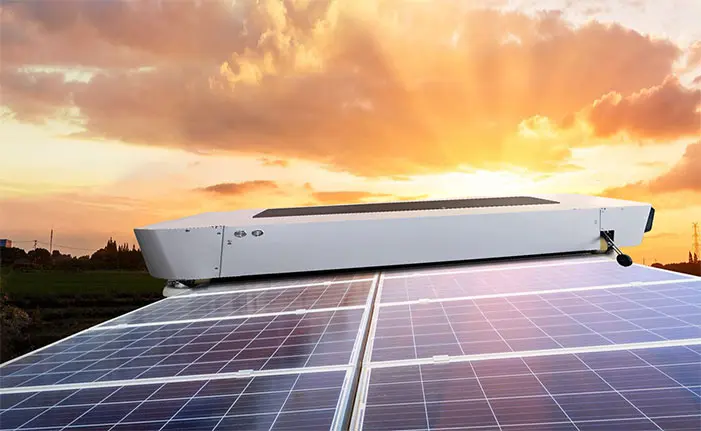
Comprehensive catalog of BoS accessories, DC combiner boxes, MC4 connectors, surge protection devices, and custom solar cabling for turnkey EPC installations.
Browse All ProductsShare your target capacity, load requirements, or tender specifications. Multifit’s application engineering team in Beijing will configure an optimized battery storage bill-of-materials, provide full technical datasheets, and deliver factory-direct pricing within 24 hours.